How an Epoxy Garage Floor Job Runs
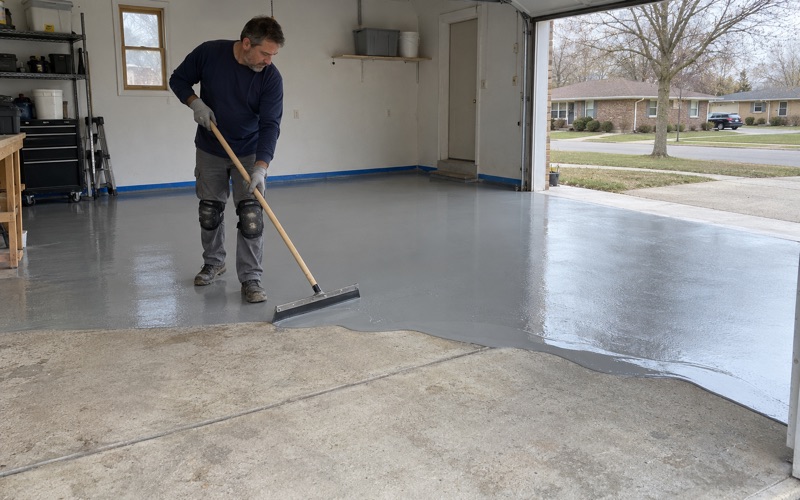
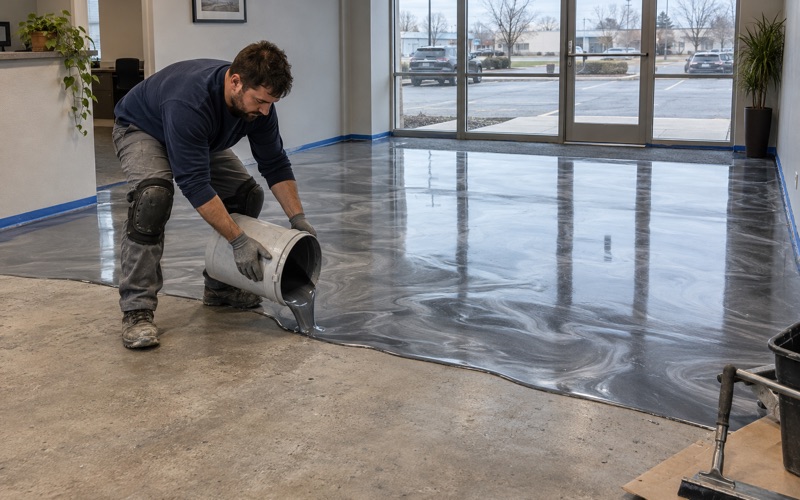
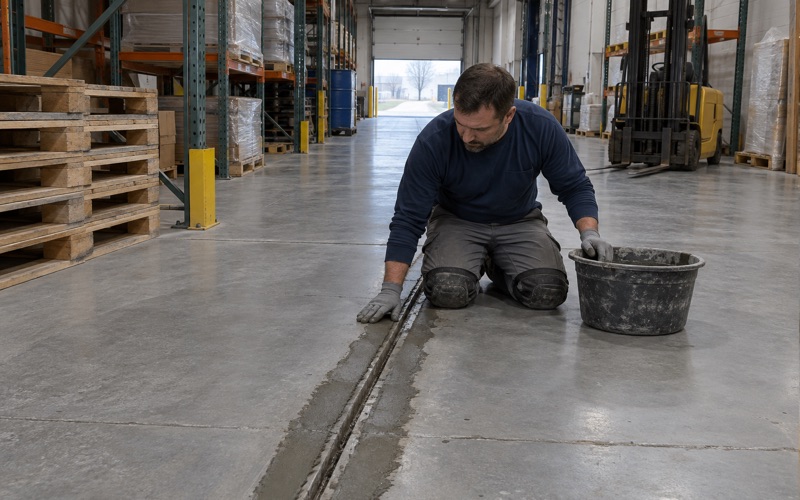
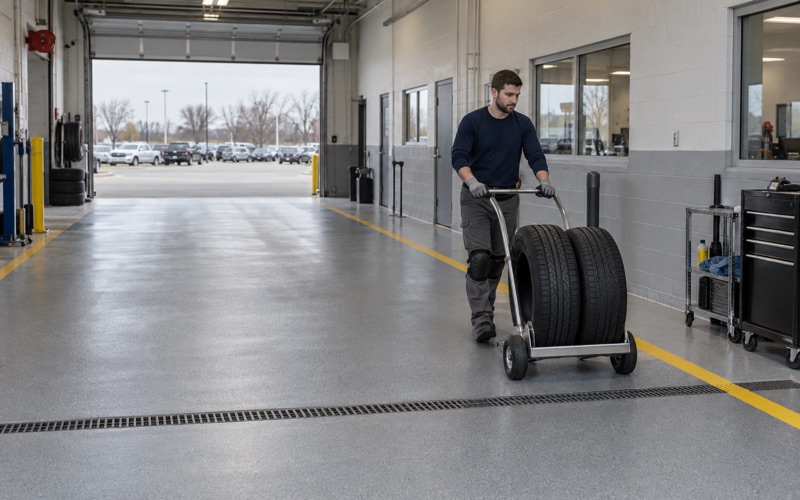
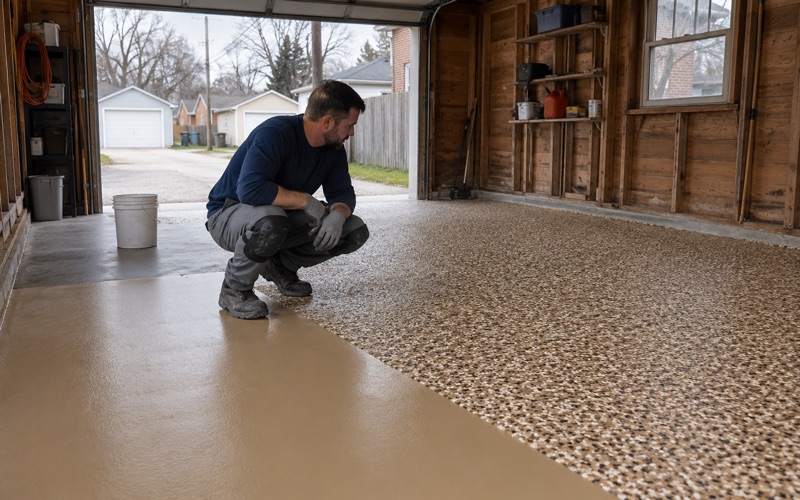
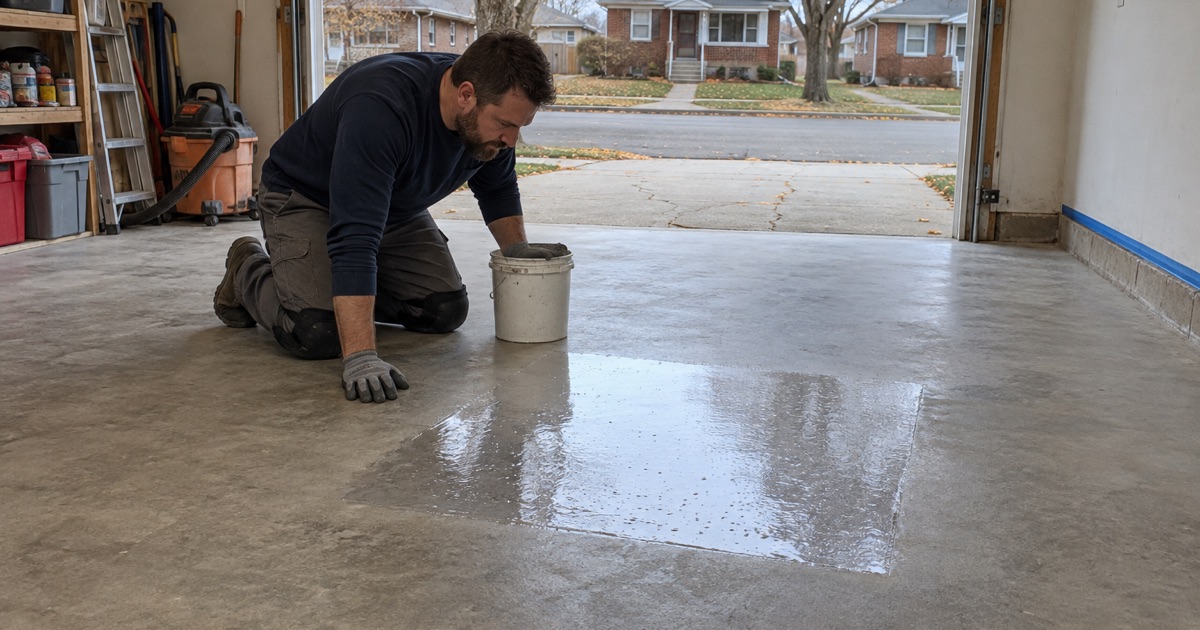
An epoxy garage floor starts with a walk-through: we read the cracks, joints, oil stains and any old coating, then test the slab for moisture. Prep day is grinding, crack repair and vacuuming, and the coating goes down in layers over one or more days. Cars return after the topcoat reaches its rated cure, not on the day it looks dry.
Grinding Through Sealer and Paint
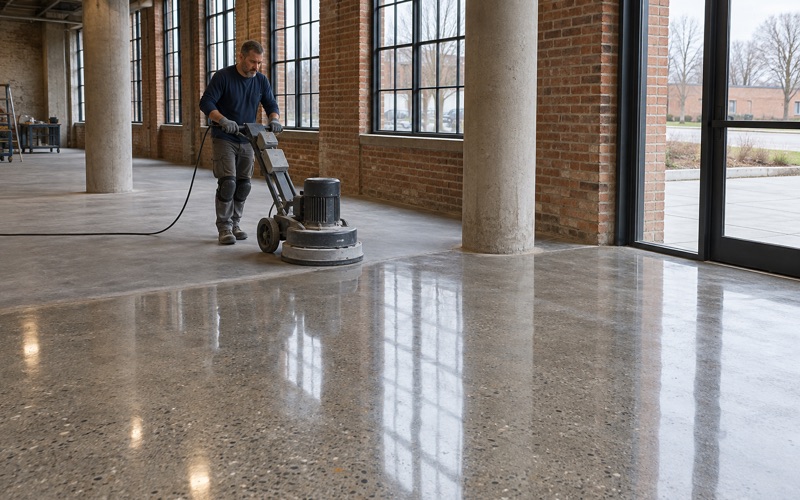
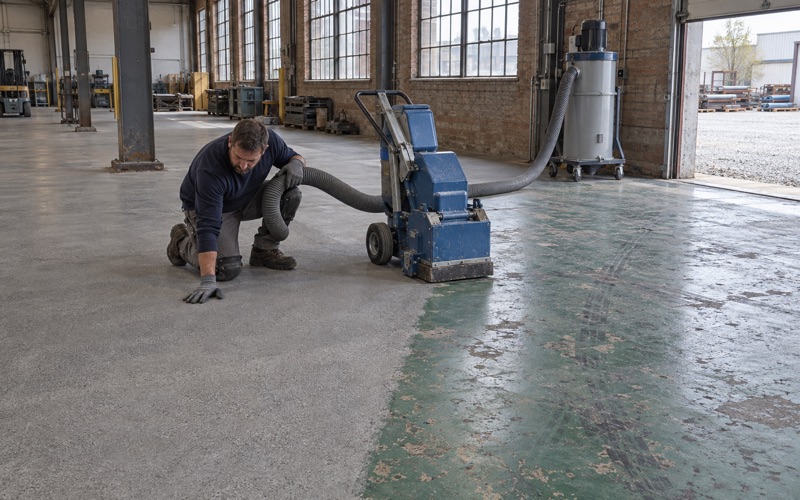
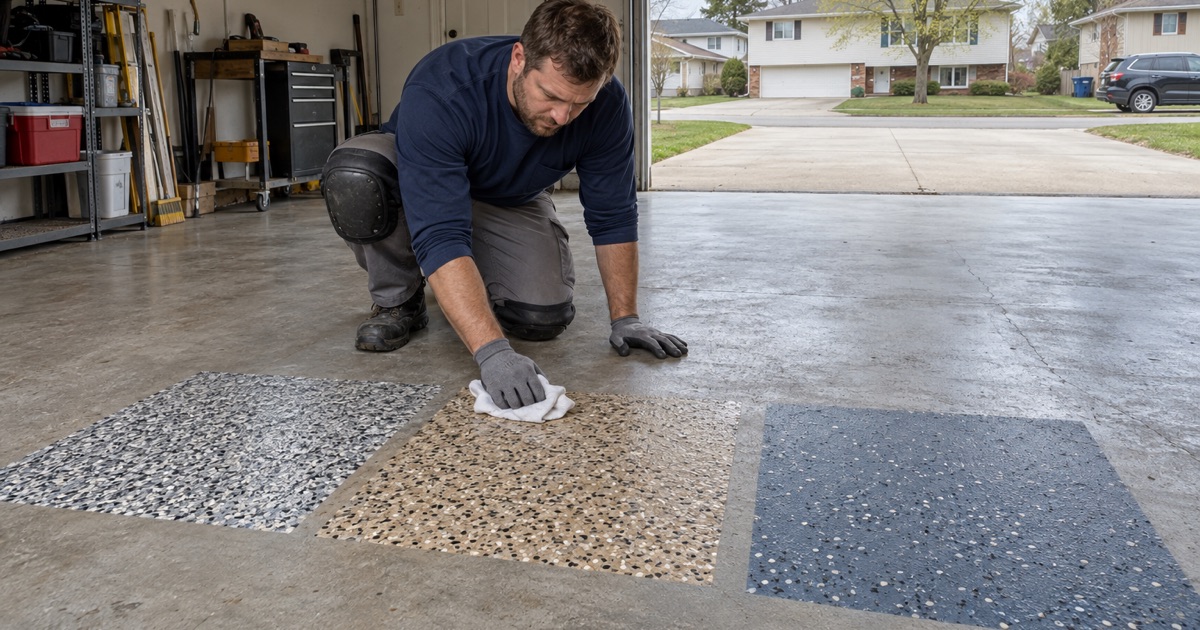
A coating bonds to whatever is on top of the slab, so a floor that was sealed, painted or waxed holds a new coat only as well as the old film holds the concrete. We grind through to sound concrete with a diamond grinder or shot blaster. An acid etch cannot remove a sealer, which is why it has no place in our process.
Moisture Testing a Garage Slab
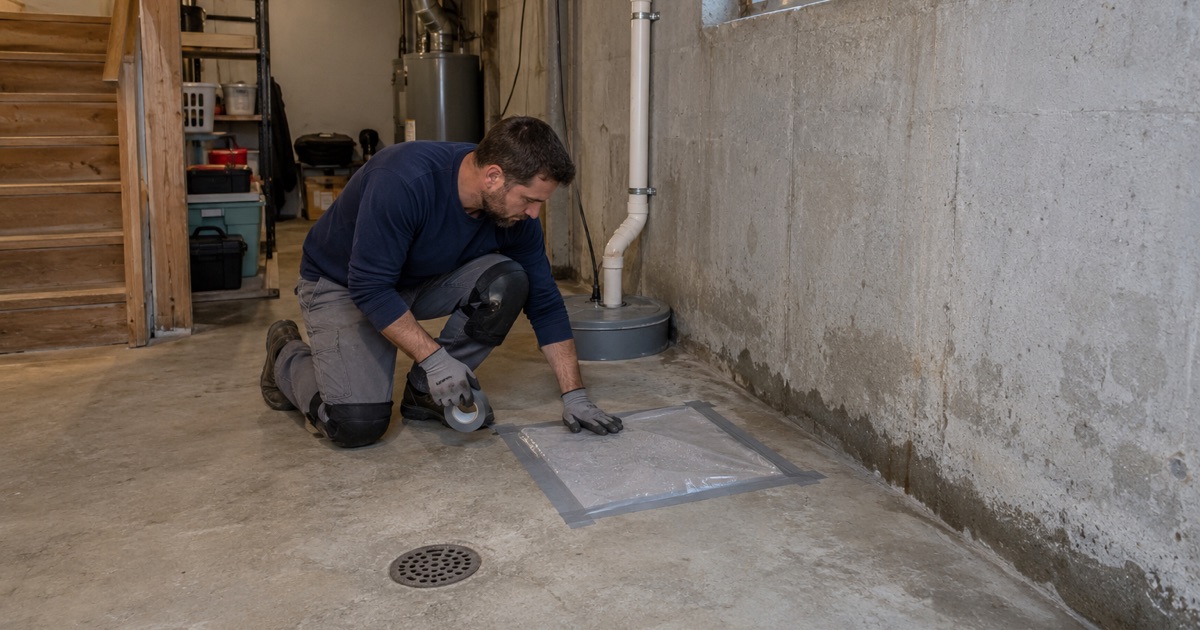
Wisconsin’s Uniform Dwelling Code calls for a 6-mil vapor retarder under new house slabs but exempts an unconditioned attached garage slab under SPS 322.38. Many garage floors therefore have nothing stopping ground moisture from rising. We run an ASTM D4263 plastic sheet test or in-situ relative humidity probes first, because vapor pushing up is a leading reason garage coatings peel.
What SPS 321.203 Says About Garage Floors
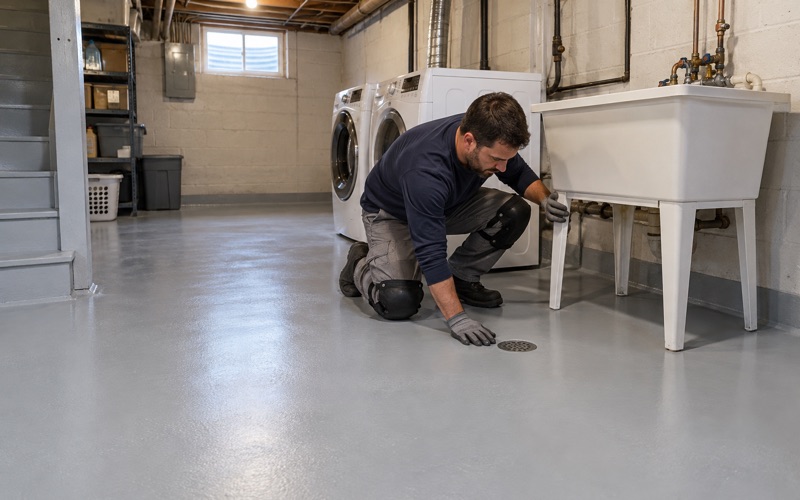
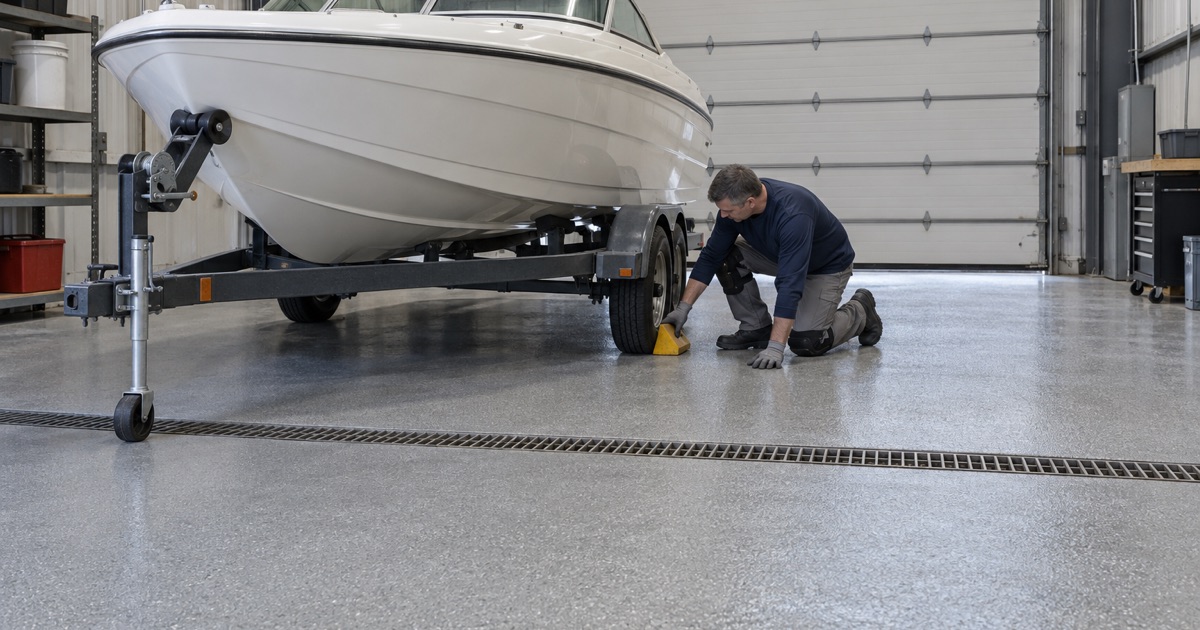
Wisconsin’s dwelling code section for garage floors, SPS 321.203, requires concrete or another noncombustible material impermeable to petroleum products, sloped to the door, to grade or to a floor drain. A note under the rule says it does not require the concrete to be sealed or coated. That choice is the owner’s, and we build the coating around the slope already there.
Coating Versus Replacing a Garage Slab
Replacing an accessory garage slab appears on the City of Racine’s 2026 building permit fee schedule as a slab-only item at $100 per slab, and starting without that permit doubles the fee. Coating an existing slab has no line on the schedule. We still put the question to the Building Division before scheduling, because a slab that needs replacing is a different job altogether.
Road Salt and Calcium Chloride Damage
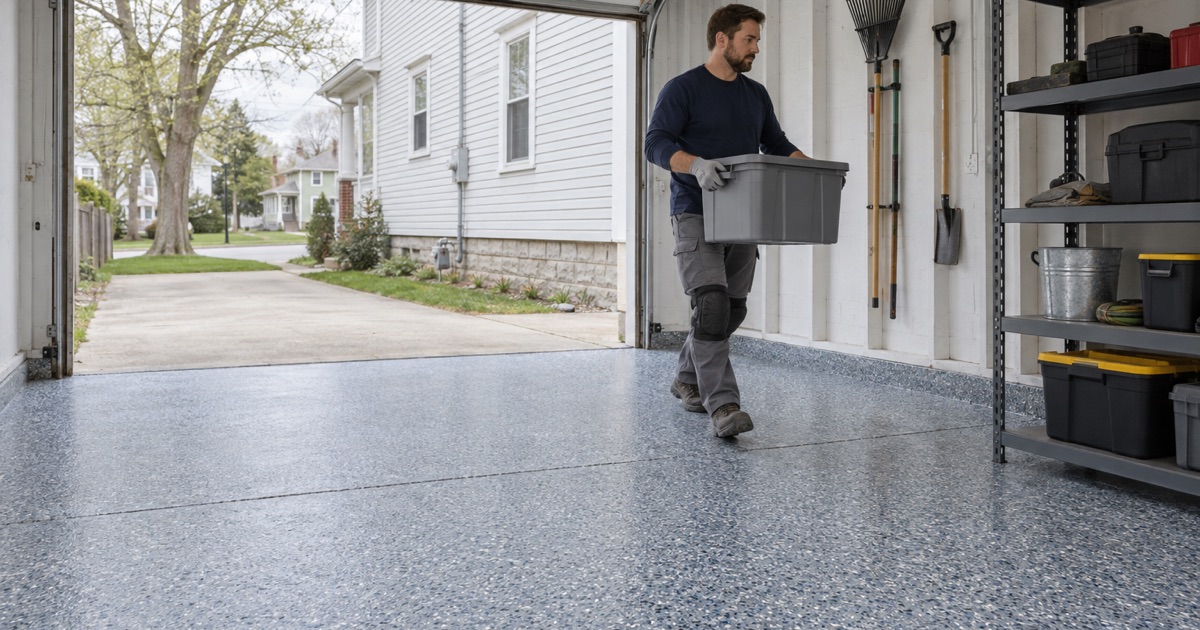
Brine and rock salt ride into a garage on the tires all winter, and on bare concrete the meltwater soaks in, refreezes and scales the surface. A seamless coating with a chemical-resistant topcoat keeps chlorides on top, where a squeegee can move them out the door. We carry the system to the slab edges and the apron joint, where meltwater pools first.
Winter Installs and Unheated Garages
Racine’s long-term weather normals count roughly 119 nights a year at or below freezing, and a resin coating needs the slab above its minimum cure temperature and safely clear of the dew point. In a heated garage we can work through winter. In an unheated one we say plainly when the job has to wait for spring rather than coat a cold slab that will not cure properly.
Outgassing, Bubbles and Pinholes
Concrete holds air, and as a slab warms during application that air rises into the wet coating and leaves bubbles or pinholes behind. We prime while the slab temperature is steady or falling, using a penetrating 100% solids epoxy primer that seals the surface first. Any pinhole left in the primer coat is filled before the next layer goes on.
Garage Floor Kits Versus Professional Coatings
An epoxy garage floor kit is usually a water-based product a fraction of the thickness of a 100% solids system, rolled over a slab cleaned with a mild acid wash. It looks fine until hot tire pickup lifts it under the wheels. A professional job differs in the grinding, the moisture testing, the resin’s solids content and the polyaspartic or polyurea topcoat over it.
What an Epoxy Garage Floor Costs
Price moves with the slab more than the color: square footage, how much grinding and crack repair it needs, whether an old coating has to come off, moisture mitigation, and whether you choose flake, metallic or a solid finish. Our proposal lists each of those as its own line, along with the product and finished thickness, so two quotes can be compared fairly.
Coating Warranty Exclusions, Moisture First
Most coating warranties exclude failures caused by moisture vapor or hydrostatic pressure from below, and many also exclude hot tire pickup, chemical spills and impact. We read those exclusions out before the job is sold, naming moisture first, and write any warranty into the contract. A peeling patch two years later should never be a surprise argument.