
Racine Epoxy Flooring installs flake epoxy floors in Racine, WI, serving surrounding cities including Mount Pleasant, Sturtevant, Caledonia, Somers and Kenosha, and they are the system we recommend most often for working garages and busy basements. In more than 20 years of coating floors, we have found nothing more forgiving of real life than a well-built flake floor.
The chips break up the surface visually, hiding dust, road grime and small imperfections. They add texture underfoot and thickness to the system. And because the pattern is random, a damaged area can be patched without leaving an obvious square.
What a Flake Floor Is Made Of
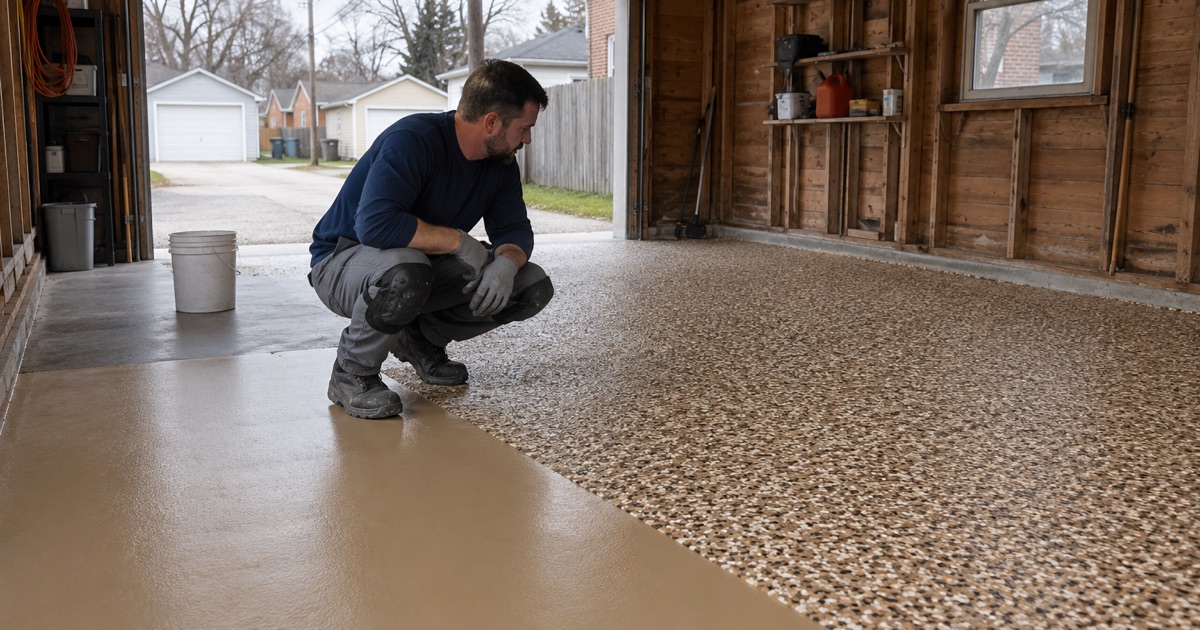
Vinyl Chips and Chip Sizes
Decorative flake is made of thin vinyl chips broadcast by hand into a wet epoxy or polyaspartic base coat. Chips come in a range of sizes, from tiny specks that read almost like granite to larger chips that create a bolder, more open pattern.
Smaller chips give a tighter, more uniform look and blend repairs more easily. Larger chips make a stronger statement and suit big garages and commercial spaces where the floor is seen from a distance. We help you choose based on the room size and the look you prefer.
Full Broadcast Versus Partial Broadcast
In a full broadcast, we throw flake into the wet base until it will accept no more, a point called rejection. After curing, loose chips are scraped and vacuumed off, leaving a dense, textured surface that hides the base coat entirely.
A partial broadcast scatters chips more lightly over a tinted base, leaving color showing between them. It uses less material and suits budget-conscious projects, but it offers less texture and less dirt-hiding pattern. We price both so you can see the difference.
Choosing a Flake Blend
Colors That Hide Real Garage Grime
In a Racine garage the floor will meet road salt, sand, oil drips and gray slush for months each year. Blends built on grays, tans and browns, with a few lighter or darker accent chips, hide that grime best. Very dark or very light blends show dust and salt residue more readily.
For basements and indoor spaces, you have more freedom. Blues, greens and warmer tones can tie a floor into a family room or a home gym. We help you weigh how a blend looks fresh against how it will look on an ordinary day.
Seeing Samples Under Your Own Lighting
A blend that looks one way on a website can look different on your floor. We bring sample boards to the estimate and look at them under your garage lights, window light and any fixtures in the space.
It also helps to look at samples on the floor rather than at eye level, since that is how you will see the finished surface. Choosing a blend in your own conditions reduces surprises when the job is done.
Where Flake Floors Work Best
Garages That See Real Winters
Flake is our usual recommendation for garages that see daily driving. The texture hides the salt film and tire marks winter brings, and the full-broadcast build adds thickness that resists chipping from dropped tools and floor jacks.
We build garage flake floors on a ground and moisture-tested slab, never on acid-etched concrete, and finish them with a clear topcoat that resists hot tire pickup and chemical staining. The system runs right to the door edge, where meltwater collects.
Basements, Laundry Rooms and Workshops
In basements, a flake floor makes laundry rooms and workshops easier to keep clean and more comfortable to stand on than bare concrete. It hides lint, sawdust and small spills between cleanings.
Basement slabs are tested for moisture before coating, and a moisture-mitigation primer goes down first when readings are high. We coat around sump pits and floor drains rather than over them, keeping lids and cleanouts accessible.
Commercial Spaces With Heavy Foot Traffic
Flake floors also suit locker rooms, break rooms, retail backrooms and service bays. The pattern hides scuffs between cleanings, and a textured topcoat adds grip in areas that get wet.
In businesses that cannot close, we phase the work by area and can install overnight or over weekends using fast-curing topcoats that return the floor to service quickly. Joints that carts and pallet jacks cross are filled with a semirigid filler first, so the flake system does not chip along the joint lines.
Topcoat, Texture and Care
Building the Clear Topcoat
After the flake is scraped and vacuumed, we apply one or two coats of clear polyaspartic or polyurea. The topcoat locks the chips in, sets the final texture and protects the floor from ultraviolet light, abrasion and chemicals.
One topcoat leaves more texture; a second smooths it toward a semi-smooth surface that is easier to mop. We choose based on whether grip or easy cleaning matters more in the space, and we can add aggregate in specific zones.
Cleaning and Recoating Over Time
A flake floor needs little maintenance. Sweep or dust mop regularly, rinse winter salt residue rather than letting it dry, and wash with a pH-neutral cleaner. Avoid harsh solvents and abrasive pads that dull the topcoat.
After years of traffic, the topcoat may wear in the tire paths. It can be lightly sanded and recoated without redoing the flake or base, which renews the floor at a fraction of the cost of a full system.
- 20+ Years on Concrete
- Moisture Tested First
- Written Contracts